2026.10.05
Construction
Advancing 3D Concrete Printing with N-SAPs
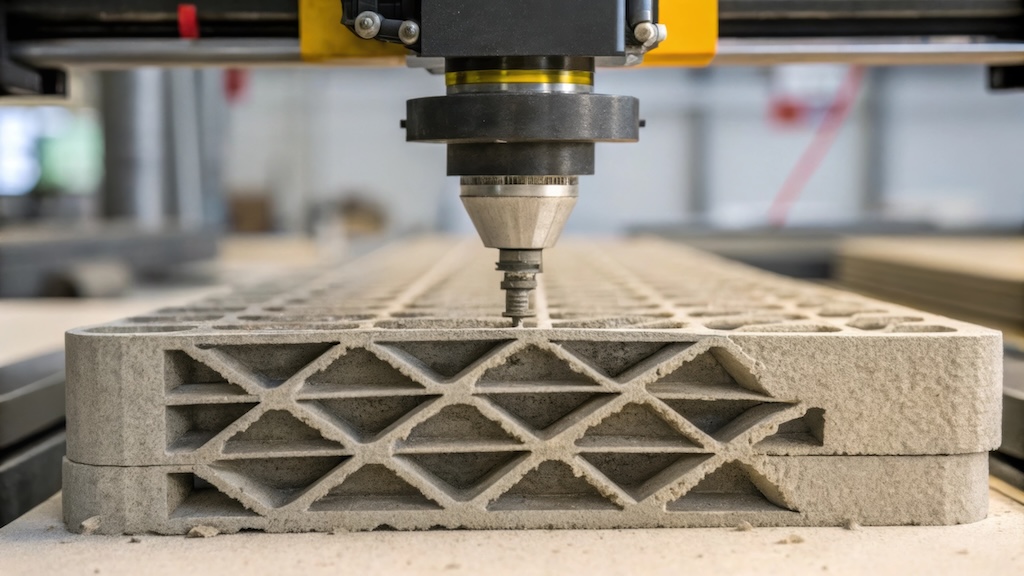
In our last blog post, we explored the features and benefits of Nippon Shokubai's novel Super Absorbent Polymers (N-SAPs), which are poised to enhance sustainability in the construction industry due to their slow absorption rate and other advanced features. Many of these same properties show promise for addressing material challenges in 3D concrete printing (3DCP) applications.
As opposed to conventional Super Absorbent Polymers (SAPs) that quickly absorb water and can negatively impact workability, 3DCP requires precise rheological control throughout the printing process. Nippon Shokubai has developed a liquid SAP formulation — N-SAP III at approximately 18% concentration — specifically for 3DCP applications using a 2K printing system, where an accelerator, such as aluminum sulfate, is added through a secondary mixing process prior to extrusion.
Exploring the Features and Benefits of N-SAPs
One key feature of N-SAPs is their slow absorbing behavior — an important characteristic for 3DCP applications as it offers better control over the rheological properties of the concrete mix. Slow absorption ensures the water within the mix is released gradually, maintaining the desired consistency and workability during the printing process. This controlled release shows potential for achieving the required buildability and structural integrity of printed layers.
In addition to slow absorption, N-SAPs gradually desorb water as the internal humidity of the concrete drops, facilitating internal curing. By retaining and gradually releasing water, these polymers ensure the hydration process of cement continues even after the initial setting. This prolonged hydration improves compressive strength and reduces the risk of shrinkage cracks, which are particularly important in 3DCP applications where layers must bond effectively.
Buildability and Rheological Control
For 3D concrete printing to be successful, the concrete mix must exhibit excellent buildability and rheological control. Initial testing suggests N-SAPs can contribute to meeting both these requirements by modulating the viscosity and flowability of the mix. Their slow absorption achieves precise control over the setting time and stability of the printed layers, ensuring each layer can support the subsequent one without deformation or collapse.
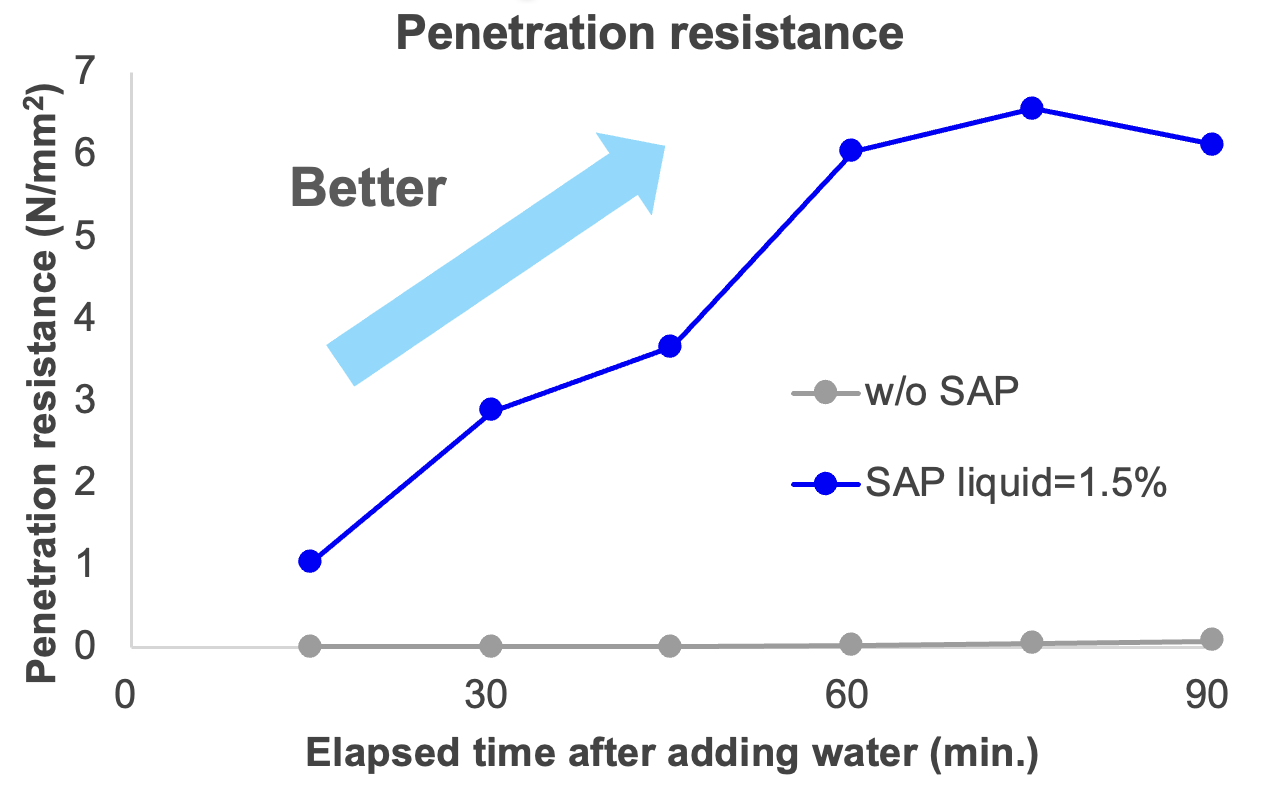
This graph illustrates the penetration resistance of a low-carbon mortar mix, comparing a mix without SAP to one with a 1.5% liquid SAP dosage. The results suggest that N-SAPs are effective for buildability, as the mix with SAP shows a higher penetration resistance, indicating a better yield stress behavior as the SAP gradually absorbs water.
3DCP and Sustainable Construction
3D concrete printing is recognized as a promising technology that can increase productivity in construction. However, 3DCP mixes currently use more clinker per unit volume than traditional concrete due to the absence of coarse aggregate, which poses environmental challenges since clinker production is the primary source of CO2 emissions in the cement industry. N-SAPs can enhance the sustainability of 3DCP by reducing clinker content in concrete mixes. By facilitating the use of supplementary cementitious materials (SCMs), such as ground granulated blast-furnace slag (GGBS) and calcined clays, N-SAPs help mitigate the environmental impact of 3D printed concrete production.
N-SAPs have been tested in low-carbon mortar formulations specifically designed for 3DCP, including mixes with calcined clay and limestone, demonstrating their compatibility with sustainable printing applications.
Learn More
N-SAPs’ slow absorption behavior, internal curing capabilities and compatibility with sustainable cement alternatives position them as a compelling admixture for 3DCP applications. As research continues, these polymers could play a significant role in making 3D concrete printing more effective — and even more sustainable.
To learn more, please contact us.
Newsletter Sign-Up
Sign up for our e-newsletter and learn more about what we do at NAII Back to List
  Page Top